

Are you looking for a property? Have you done your due diligence yet?
Well if you’re planning to skip on this process thinking it to be very exhaustive then let me tell you, it will be a very expensive mistake.
A thorough check of all the aspects of the property as well as the developer who is selling the property, his or her credibility as a developer, all these and more are important steps before proceeding to buy any property. It is therefore very essential to do proper property due diligence in order to avoid various kinds of hassles or hidden costs or charges post your property purchase.

What Is Property Due Diligence and Why Is It Important?
The process of going through the legal checks before buying the property is call Property Due Diligence. It is important to go through the property document verification in order to make sure it is structurally safe, legally sound, and thus protects the buyer from hidden costs.
This process is important as it helps the buyers to investigate thoroughly before actually investing in the building, since these investments are not small in number, therefore, one needs to make sure to check well before buying.
What Risks Can Buyers Avoid Through Proper Due Diligence?
By doing proper due diligence, buyers can avoid the risks of legal disputes, one can do proper property title verification to avoid unexpected operational disputes. It is thus important to do legal due diligence in real estate so as to avoid various costly post-purchase issues.
The process of due diligence is sometimes exhaustive but nonetheless the investor needs to complete the checklist as a proper due diligence has the potential to reveal all possible risks which can be hidden “under the hood” thereby posing a threat to hidden charges post buying.
What Are the Key Areas of Property Due Diligence?
- Legal Due Diligence: The process of checking every legal asset thoroughly in order to make sure there are no hidden charges involved, thus protecting the buyer before buying the property, is known as Legal Due Diligence.
- Financial Due Diligence : As the name suggests, it is the process where the investigator goes through the financial liabilities of the target company, checks the cash flows in order to make sure the property is liability free.
- Technical Due Diligence : The investor goes through the technical assets of the target company, checks for technical liabilities before investing in the company, this process is called Technical Due Diligence.
- Regulatory Due Diligence : This process aims at checking whether the partner involved or the organization in the property has adhered to the various laws and regulations or not to make sure the investor gets a smooth purchase.
How Can You Verify Property Ownership Before Buying?
To verify the property ownership before buying the investor needs to follow a certain checklist :
- Verify the owner’s name with the local land register
- Find information about the owner’s local chain of deeds
- Verify if there are any financial liabilities on the asset
- Make sure the municipal taxes and electricity bills are fully pay.
How Do You Check the Chain of Ownership?
One can check the Chain of Ownership by going through the following steps :
- Collecting historical deeds and tracing it to the current ones.
- You can also verify tax receipts at the sub-registrar’s office
- Obtain an Encumbrance Certificate.
By following these steps one can check the chain of ownership of the property before buying. It is an essential step in the process of investigating so the investor should not be skipping this step.
How Can You Confirm the Seller Has Legal Rights to Sell?
One can confirm that the seller has legal rights to sell by doing thorough legal due diligence. Additionally, the investor can check for the documents before buying the property.
This information is crucial in the process of due diligence as it protects the buyers from any future legal hassles associated with the property.
What Property Documents Should Every Buyer Verify?
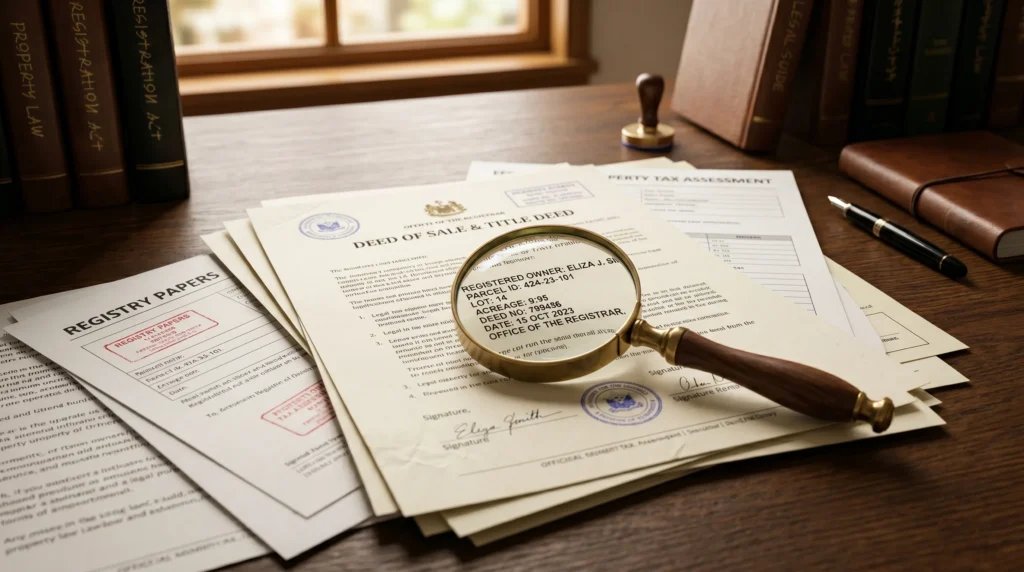
Buyers must verify certain property documents before going ahead with the buying of the property. Here is a list of documents which are essential for this verification.
- Title Deed : The title deed refers to the ownership document(s) that prove you legally own the flat, often including the sale deed itself.
- Sale Deed: The sale deed is the document that records the sale and transfer of ownership to you.
- Encumbrance Certificate : On obtaining this certificate, one can make sure there are no registered mortgages or asset liabilities left.
- Property Tax Records : This document is mandatory as it helps the investor to verify that there are no municipal dues left.
- Occupancy Certificate : This certificate is obtain from the local authorities thereby approving that the building is safe for occupancy as it follows all the rules and plans of the area.
- Completion Certificate : This certificate states that the building which is newly construct is safe and follows all the area plans.
- Approved Building Plan : This certificate states that the building is made on the approve land and followd all the rules of the construction.
How Can You Check Whether a Property Has Legal Disputes?
One can check whether a property has any legal disputes or not by obtaining an Encumbrance certificate which shows whether there are any mortgages or land disputes going on or not.
Buyers can obtain an Encumbrance Certificate from the local sub-registrar’s office and speak with local residents, neighbours, and authorities to learn more about the property’s history and any potential issues.
How Do You Verify Pending Litigation?
You can check any pending litigation while buying a property by going through the online land debates in the eCourts services portal.
Buyers should check for pending litigation before purchasing a property, as ongoing legal disputes can lead to costly court cases and financial losses.
How Can You Identify Existing Loans or Encumbrances?
To verify existing loans or encumbrances, one must check for form 15 it details all the existing loans and liabilities, if there is no form 15 and only form 16 then there are no loans or liabilities.
Existing loans on the property can be a very big liability, thus, the buyer needs to do thorough financial due diligence as well in order to avoid this liability before buying.

Why Is RERA Verification Important Before Buying Property?
It is important to go through RERA Verification as it helps the buyers and safeguards them from various risks of fraud, delayed projects or exploitation from the owner’s end.
This verification is an important step as it helps the buyers to understand their developer’s nature of work and thus makes them stop taking the claims of the developer’s words at face value.
How Can You Check a Project’s RERA Registration?
You can check a project’s RERA Registration by visiting the state’s official portal of the RERA Registration, then go to the “Registered projects” or check “Project status” and search by putting the official RERA Registration number.
What Information Can Buyers Verify Through RERA?
Buyers can verify information like how legitimate the project is as claimed by the builder. It also verifies the marketing claims given by the owner in respect of project timelines, approval plans, etc.
How Can You Evaluate the Builder or Developer’s Credibility?
The credibility of the builder can be ascertained by doing a thorough legal due diligence as well as financial due diligence to make sure no liabilities are lingering.
The credibility of the developer is important as it is going to be a long time partnership between the developer and the buyer, therefore it is important to do a credibility check before buying.
What Past Projects Should You Review?
The past projects that the developer has completed should be review along with your own property requirements to confirm that both of your plans are in alignment.
This step gives the buyer a picture of the quality and kind of work the buyer has done beforehand thus making things more clear for the buyer.
How Can You Assess the Developer’s Track Record?
One can assess the developer’s track record by checking their regulatory due diligence thoroughly. Buyers need to check this track record as it is important to see whether the developer follows all the legalities in his or her work or not.
What Financial Checks Should Buyers Perform?
The buyers should check whether there is an affordability assessment, property lien checks and a comprehensive cost projection; these are some important financial checks one should do before buying.
Are There Any Outstanding Dues or Liabilities?
One can check this by doing thorough financial due diligence. This is essential in order to eliminate any future liabilities on the property.
How Can You Verify Property Tax Payments?
By obtaining an encumbrance certificate and checking it at the local sub-registrar’s office. Verification of such payments is necessary to ensure the payments are legal and are done on time.
What Hidden Costs Should Buyers Consider?
Hidden costs like government taxes, loan fees, and post-possession charges buyers should consider before buying. These can be very expensive costs if ignored.
What Technical Checks Should Be Perform Before Purchase?
Technical checks like Title Deed Check, Approve building plans, Tax and utility receipts should be check before the purchase. Technical checks gives an approval that the property is in alignment with the authorities and has no hidden costs for the buyer.
Does the Property Match Approved Plans?
One must make sure the property should match the approved plans in order to avoid the hassles of occupancy issues. This is very important as occupancy issues can pose as a very expensive liability to the property.
Are There Structural or Construction Issues?
Before buying one should make sure that there exists no structural or construction issues by doing a proper regulatory due diligence to ensure the building is safe for staying. These kinds of issues need to be eliminate beforehand in order to have a smooth transfer of property.
Is the Property Compliant With Local Regulations?
Obtain an Encumbrance certificate and verify it with the local sub registrar’s office to make sure the property is compliant with local regulations. Compliance with local regulations ensures the nature of the developer with the people around him or her, thus, this is a necessary step in the process.
How Can You Verify Property Records Online?
By checking the various state-specific land portals, one can verify it online. Verification of this record gives the buyer a picture of how the track record of this property has been over the years.
Which Government Portals Can Help Verify Property Information?
The various state-specific government portals like Bhoomi land Records, Kaveri online services, e-Aasthi portal , National portal. These portals are handy when one needs to verify the property information as these are government portals.
What Common Mistakes Should Buyers Avoid During Due Diligence?
Common mistakes to avoid :
- Rushing through or skimming the process of due diligence.
- Considering the developer’s words in face value
- Focus only on the financial aspect and ignore the operational values
- Legal risks
- Cultural risks.
These mistakes can be expensive if avoided, thus, make sure to go through the process thoroughly.
Complete Property Due Diligence Checklist for Home Buyers
- Legal Due Diligence
- Financial Due Diligence
- Technical Due Diligence
- Regulatory Due Diligence
The process of due diligence is a potential reveal of the kind of property you are investing in, thus, following this checklist, home buyers can easily go through the process and ensure to invest in a safe property that aligns with their future home goals.
Frequently Asked Questions
How Long Does Property Due Diligence Take?
Around 2 to 4 weeks for residential real estates and 30 to 90 days for commercial real estates
Can I Perform Due Diligence Without a Lawyer?
No, you cannot as there is legal due diligence involve which needs a lawyer.
What Is the Difference Between Property Verification and Due Diligence?
Property verification aims only for the real estate aspects which confirms or verifies whether the property is safe for occupancy or is aligne with the plan, due diligence is the overall aspect of investigation before buying a property.
Is RERA Verification Enough Before Buying a Property?
No, before purchasing a home, RERA verification is insufficient on its own. To guarantee a secure investment, you should confirm the property title, ownership records, permissions, encumbrances, and other legal documents in addition to project registration and regulatory compliance.
What Is the Most Important Step in Property Due Diligence?
Verifying the property’s legal ownership and title is the most crucial part of property due diligence. In addition to helping you avoid future disagreements, fraud, or legal issues, this guarantees the seller’s right to sell.
Conclusion
One must make sure to go through a Due Diligence process in order to make sure you’re investing in the right kind of property without any hidden charges to deal with once you invest in it.
The process of due diligence is important as it is an investigation before investing, thus, Onset Realty can help you with this process, as, they help you with your property management decisions, whether your a home buyer looking for your future home or a broker this platform will be your guide through your journey to take the right steps and make the right decisions.
Armed with proper and through due diligence, the process of investing in real estate can be made much smoother with Onset Realty.